
3 hr
Nagara River Cormorant Fishing Evening Cruise
Experience a thirteen-century-old fishing tradition by firelight on Gifu's historic river
Reserve
Witness 1,300 years of tradition on the water, torchlight and trained birds working the current.
Hand-picked by our editors — the best evening cruise experiences from 5 verified operators on the Nagara River.
Verified partners for every tour, free cancellation where available, and instant confirmation on every booking.
3 hr
Experience a thirteen-century-old fishing tradition by firelight on Gifu's historic river
Reserve
4 hr
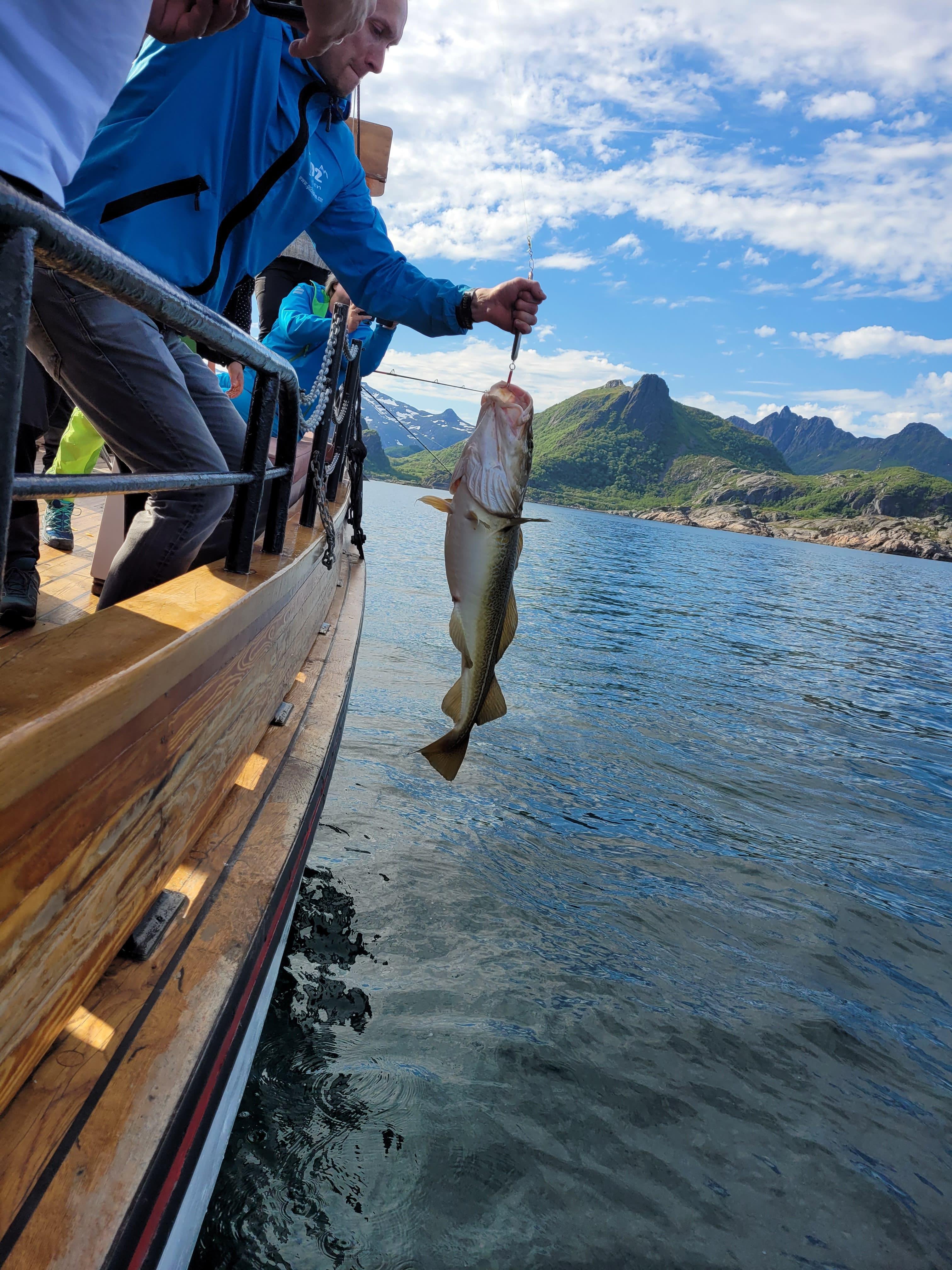
Join a 4-hour Arctic fishing journey departing Svolvær—catch cod and haddock while hearing tales of coastal life.
Reserve
6 hr
Join a working fisherman for a day at sea: haul nets, snorkel crystal waters, feast on your catch.
ReservePrices from verified partners. Availability updates in real time at checkout. Free cancellation policies apply where shown.
The landmarks, rooms, and views travelers on this tour remember — all visible on a single visit.
The primary site where the 1,300-year-old ukai tradition is performed nightly.
They complement each other; most visitors find the Gifu Nagara River Cormorant Fishing experience provides a more accessible urban spectacle, while the Seki site offers a grounded connection to the rural roots of ukai.
| Feature | Top pick Nagara River (Gifu) | Seki Cormorant Fishing |
|---|---|---|
Location |
Gifu City | Seki City |
Accessibility from Gifu City |
Direct access | 30-40 minutes by train or car |
Viewing Style |
Large shared boat procession | Smaller intimate boat perspective |
Historical Significance |
Imperial patronage tradition | Traditional Oze lineage preservation |
Atmosphere |
Grand festival scale | Quiet contemplative setting |
| See tickets → |
Verdict: Choose gifu nagara river cormorant fishing tours if you prefer convenience, or opt for Seki if you seek a quieter look at these gifu nagara river cormorant fishing tickets and the historical ukai fishing master techniques.
Choose your ticket, select your date, and reserve in under two minutes. Secure checkout handled by our verified partner.
Instant confirmation by email, with a mobile voucher you can save offline. No printing, no queuing at a collection desk.
Arrive at the entrance, show your voucher on your phone, and walk in. Most tickets include priority or skip-the-line access.
Practical details for your visit straight from our verified partners — hours, access, rules, and how to get there.
1-2 Minato-machi, Gifu City
Report 30 minutes before departure.
Take the Gifu Bus to Nagarabashi-minami or Kawaramachi stop.
Wear comfortable shoes for boarding. A jacket is recommended as evenings on the Nagara River can be cool.
Keep belongings minimal. There is no luggage storage at the pier, so secure items at your hotel.
Photography is permitted. Use a high-ISO setting to capture the firelight against the dark water during gifu nagara river cormorant fishing.
The boarding docks involve steps and moving surfaces. Please notify the office of mobility needs when securing gifu nagara river cormorant fishing tickets.
Phones are allowed for photography. Respect the quiet atmosphere of this traditional practice.
Children are welcome on the viewing boats. Ensure younger children are supervised at all times near the water.
Food is not sold on shared boats. Guests are encouraged to bring their own refreshments to enjoy during the tour.
Pets are not permitted on the shared viewing vessels. Service animals should be cleared in advance.
The fishing masters, or usho, operate nightly to maintain a 1,300-year tradition. The river environment is central to the experience.
1-2 Minato-machi, Gifu City
Report 30 minutes before departure.
Get directionsBest time to go, insider tips, nearby landmarks, and the cancellation fine print — flip through to skim what matters to you.
How crowds, weather, and events shift across the year.
May offers mild evenings and the start of the season.
Small details that turn a good visit into a great one.
Reservations for gifu nagara river cormorant fishing are essential during weekends.
Non-bookable sights within a short walk — free to visit, easy to pair.
Historic castle atop Mt. Kinka.
Flexible, no hidden fees.
Reservations should be managed directly through the official site. Please verify the 4,200 JPY entrance fee terms during booking.
Hand-picked options within walking distance — pick a district for vibe, or a specific hotel for convenience.
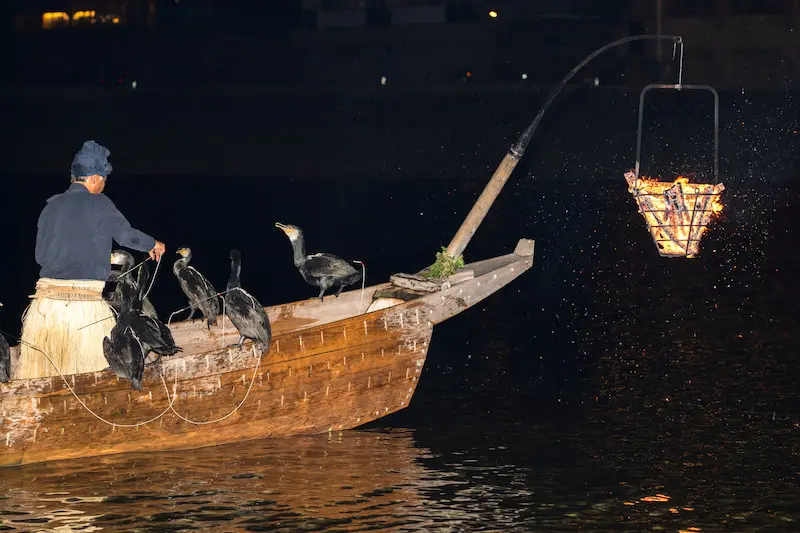
Cormorant fishing on the Nagara River has operated without interruption since the eighth century, when imperial courts in Nara and Kyoto relied on ayu sweetfish delivered by usho — cormorant masters whose hereditary title passes through a single bloodline today. The Imperial Household Agency still appoints these fishermen, and their catch remains reserved for the emperor's table, a protocol unchanged since 1890. Each cormorant is trained from the age of four months to dive on command, retrieve ayu from depths up to six metres, and surrender the fish before swallowing. A single usho manages twelve birds simultaneously, manipulating individual leashes with practiced tension while standing in a wooden boat lit by burning pine torches. Gifu Nagara River cormorant fishing tours run nightly from mid-May through mid-October, the season dictated by ayu migration patterns and water temperature rather than tourism calendars. The Nagara remains one of three rivers in Japan where ukai continues as a working practice, not a staged re-enactment. Viewing boats — long, low-sided craft accommodating twelve to fifty passengers — moor fifty metres downstream from the fishing vessels, close enough to hear the birds' throaty calls and the splash of their entry into the current. Torchlight reflects off the water in columns, illuminating the cormorants' sleek black forms as they surface with fish clamped crosswise in their beaks. The usho work in silence, reading the river's mood through vibrations transmitted up the leashes. The technique itself is simple and brutal: a loose ring of cord encircles each bird's throat, tight enough to prevent swallowing anything larger than a minnow but slack enough to allow breathing. Ayu, a slender riverine fish prized for its cucumber scent and delicate flesh, forms the exclusive target. After each dive, the cormorant returns to the gunwale, where the usho strokes its neck to coax the fish upward. A full session lasts ninety minutes, ending when the birds tire or the current shifts. The catch is weighed on board, then packed in ice for delivery to Kyoto by dawn. Gifu city rebuilt its riverfront economy around ukai in the 1950s, when post-war infrastructure projects threatened to dam the Nagara entirely. Local historians argued that cormorant fishing represented intangible cultural heritage worthy of preservation, a claim that gained traction after UNESCO formalized its heritage criteria in the 1970s. Today the city maintains a dedicated cormorant breeding facility and subsidizes the usho's equipment — boats, torches, and leashes — ensuring that gifu nagara river cormorant fishing tours remain viable as both tradition and livelihood. The viewing fleet expanded from eight boats in 1960 to forty-three today, yet the number of active usho has held steady at six.
"A single usho manages twelve birds simultaneously, manipulating individual leashes with practiced tension while standing in a wooden boat lit by burning pine torches."
A step-by-step walkthrough of the visit — what you'll see, how long each stage takes, and the details that matter.
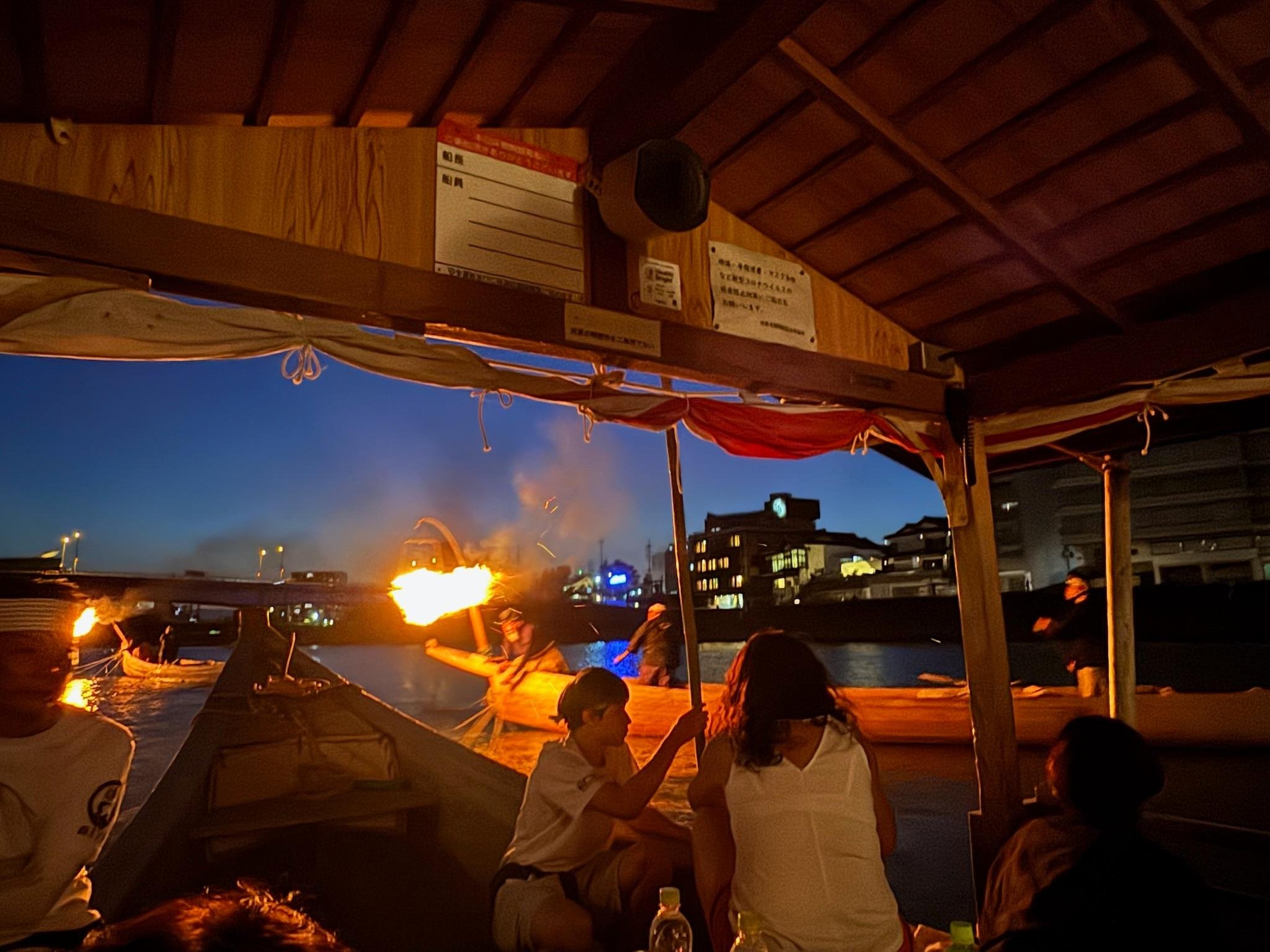
You board at Nagara Bridge as twilight settles over the river, stepping into a long wooden viewing boat with tatami seating or bench rows depending on the vessel. The crew poles away from the dock at 18:30, moving upstream to the fishing grounds where six usho boats are already anchored in a staggered line. Torches flare to life as darkness takes hold, each flame fed by bundles of dried pine that crackle and hiss above the water. The lead cormorant master releases his birds in a controlled cascade, twelve black shapes arrowing into the current within seconds. You watch them surface one by one, ayu flashing silver in their beaks, and return to the boat's edge where the usho works each bird with swift, precise motions. The rhythm accelerates — dive, retrieve, release — until all twelve cormorants are cycling through the water in overlapping intervals. Your boat drifts closer, within thirty metres, close enough to see the cord around each bird's throat and the usho's hands moving in practiced sequence. The session peaks around 19:15, then tapers as the cormorants tire and the usho signals the final dive. You return to the dock by 20:00, the torches extinguished and the river returning to darkness.
Yes, booking gifu nagara river cormorant fishing tickets in advance is recommended to ensure a spot on the shared boats.
The boats operate from 18:15 to 20:30 nightly during the season.
Yes, private charters are available; please contact the Gifu City Cormorant Fishing Viewing Boat Office directly.
The fee is 4,200 JPY on standard nights and 5,100 JPY on peak nights.
There is no strict code, but warm layers are suggested for the river environment.
Children are welcome to experience the gifu nagara river cormorant fishing tradition.
The experience typically lasts from departure at 18:15–19:15 until return at 20:30.
No food is sold onboard, but you are welcome to bring your own for your gifu nagara river cormorant fishing tour.
If water levels rise, the event will be canceled for safety reasons.